Ordering custom corporate polo shirts, workwear shirts, or company event jerseys is one of the most critical responsibilities for Procurement officers and HR teams. You need to balance "Budget, Fabric Quality, Sizing for hundreds of staff members, and Strict Event Deadlines". A single misstep can cause delayed deliveries right before your annual kickoff or mismatched branding colors. Here, Chiangrai Clothing shares our proven 5-Step Professional Procurement Checklist to guarantee smooth execution, full tax compliance, and 100% on-time delivery.
Step 1: Reverse Lead Time Planning
Pinpoint Your "Event Date" and Count Backwards 30-40 Days
The #1 pitfall in corporate apparel orders is "Ordering too late". When rushed, factories cannot produce physical strike-offs or conduct full multi-point QC checks. Standard professional lead times for corporate uniform production should account for:
- Quotation & Fabric Selection (3–5 days): Choosing fabric blends, Pantone color matching, and issuing official quotes.
- Digital Mockup & Physical Sample Strike-off (5–7 days): Creating real embroidered or silk-screened test pieces on target fabric for executive sign-off.
- Mass Production & Assembly Line (15–20 days): Collar knitting, fabric dyeing, precision pattern cutting, sewing, and 100% QC.
- Dispatch, Buffer & Staff Distribution (3–5 days): Shipping logistics and allowing employees to try on their uniforms before the actual event.
Step 2: Prepare Precise Specifications & Vector Artwork
Clear Specs Accelerate Accurate Quotations
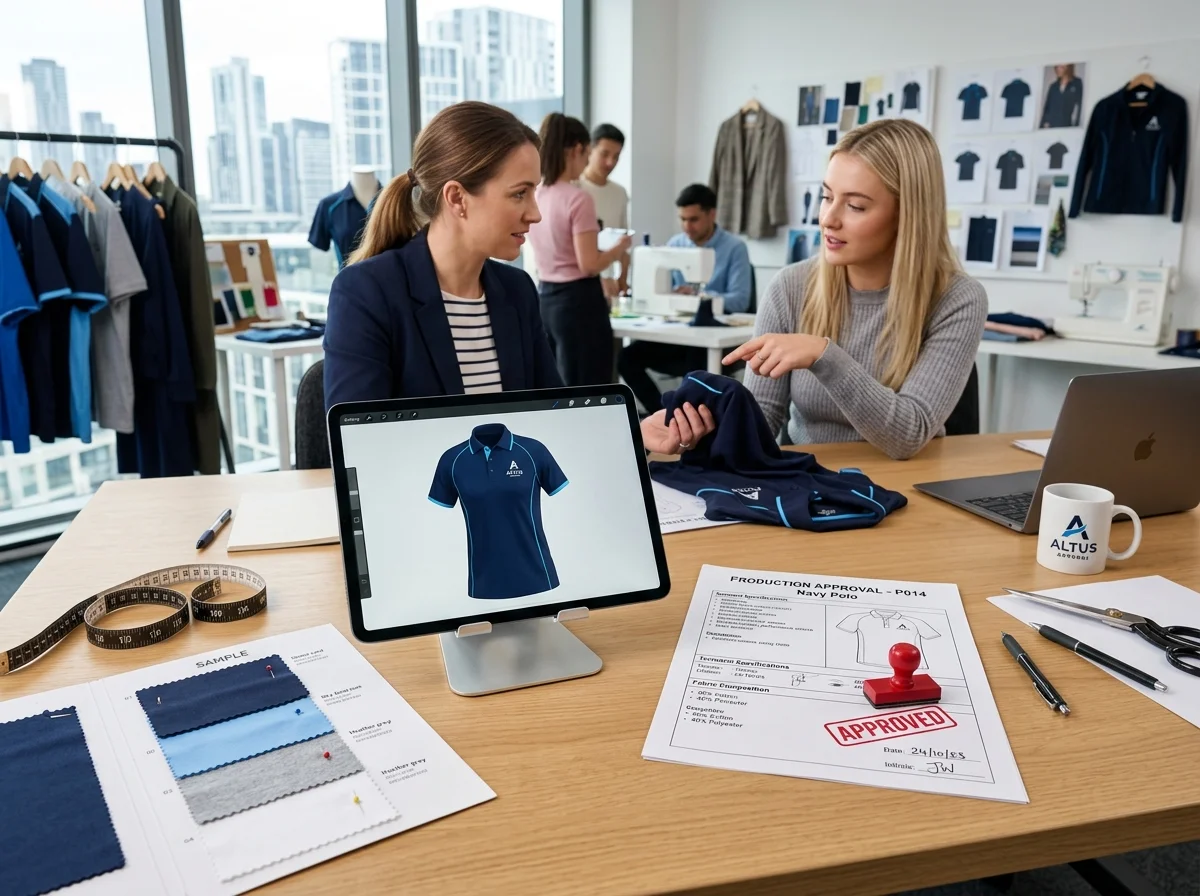
Having these 4 details ready before approaching your manufacturing partner will cut back-and-forth communication time in half:
- Garment Style & Estimated Quantity: Polo shirts, mechanic shop shirts, aprons, or T-shirts with estimated volume (e.g., 100 pcs vs. 500 pcs).
- Fabric Specifications: Intended usage environment (e.g., breathable CVC fabric for air-conditioned offices vs. heavy-duty TC drill for warehouses).
- Corporate Identity (CI) Colors: Pantone color codes or previous physical shirts for laboratory color-matching.
- Vector Logo Files: High-resolution vector files such as
.AI,.EPS, or print-ready.PDFso artwork lines stay razor-sharp during embroidery digitizing and screen engraving.
Step 3: Approve 3D Mockup & Physical Pre-Production Sample
Never Greenlight Mass Production Without a Physical Sample!
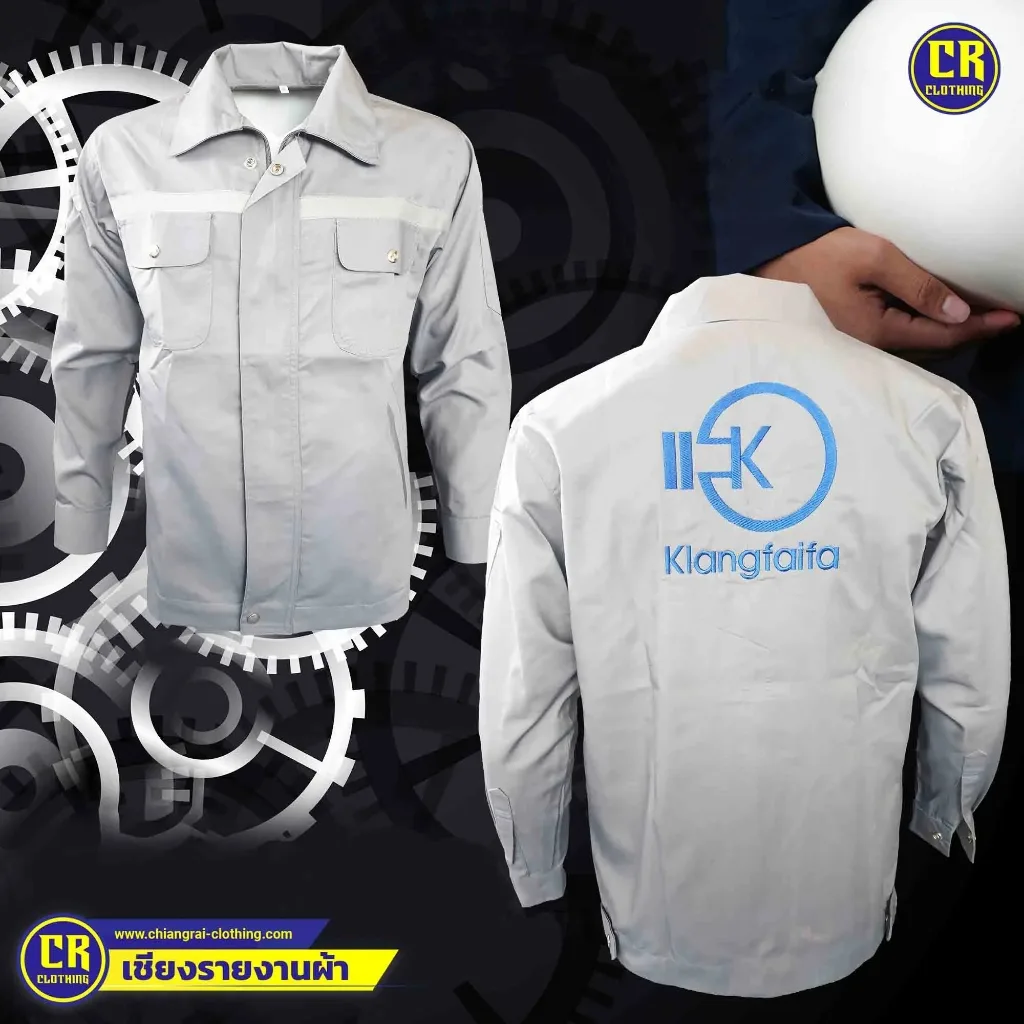
For B2B bulk orders, relying solely on mobile screens can lead to discrepancies because smartphone displays vary drastically in color temperature and saturation. Follow this standard sign-off workflow:
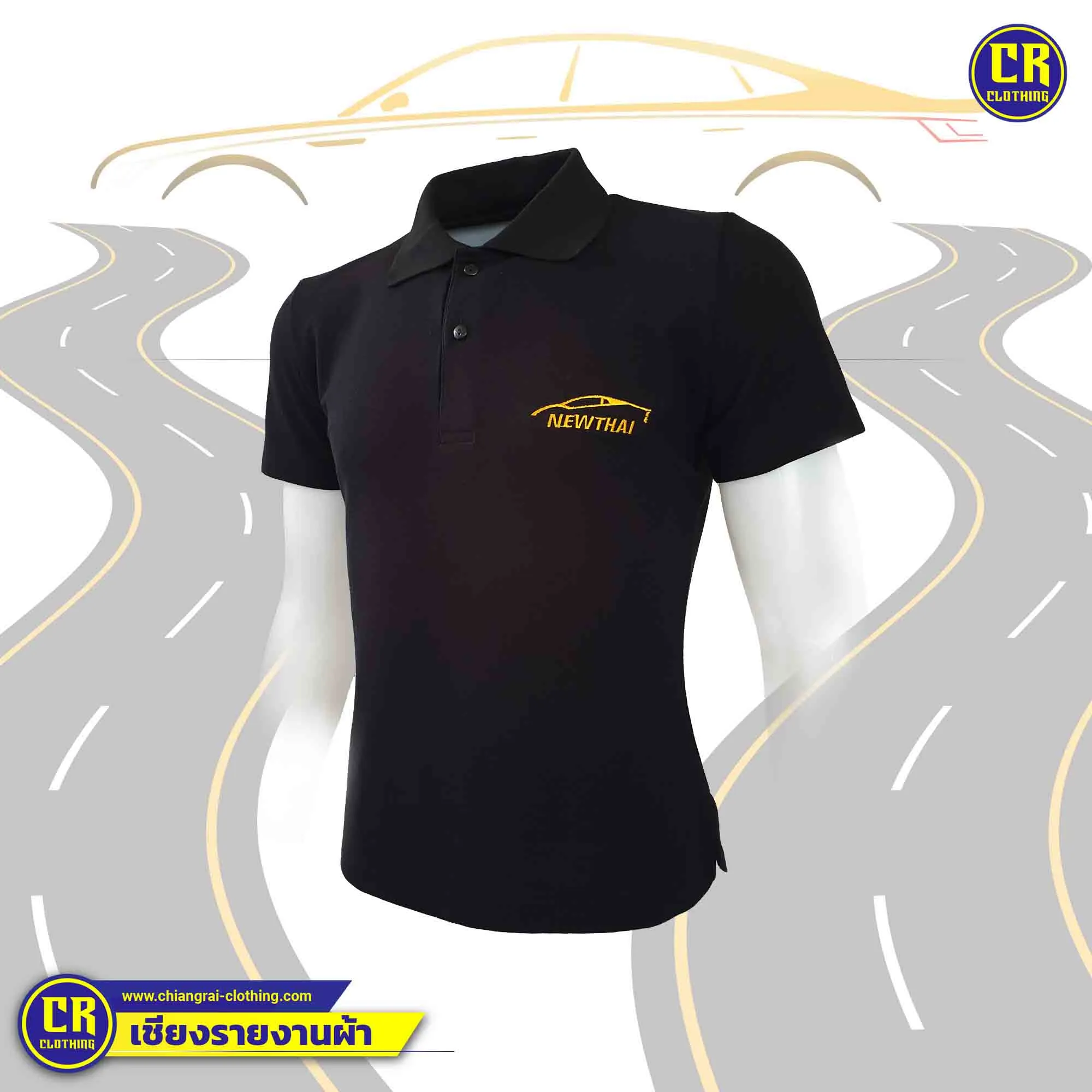
- Review 3D Digital Mockup: Verify exact logo sizing (e.g., chest width 8.5 cm, back print width 26 cm) and placement coordinates.
- Proofread All Text: Double check department names, company slogans, and spelling across all logos.
- Physical Swatch / Pre-Production Sample: Touch and feel the actual fabric weight, inspect embroidery thread stitch density, and evaluate color fastness before signing the formal approval sheet.
Step 4: Verify Legal Documentation & Tax Compliance
Partner with Registered Legal Entities for Full Tax Compliance
For corporations, listed enterprises, and government agencies, financial transparency and accounting compliance are paramount. A certified manufacturer must supply complete taxation documents:
- Official Quotation: Detailed unit costs, fabric composition, breakdown of VAT (7%), and explicit payment milestones.
- Purchase Order (PO) Processing: Formal acceptance and binding delivery timelines.
- Full Tax Invoice / Official Receipt (ใบกำกับภาษี/ใบเสร็จรับเงิน): Fully compliant with the Revenue Department for 100% input tax credits.
- Withholding Tax Certificate (WHT 3%): Standard corporate withholding tax handling for custom manufacturing services.
- Company Registration & VAT Certificate (ภ.พ.20): Proof of bona fide legal corporate registration.
Step 5: Systematic Quality Inspection & Distribution
1. Individual Size Packaging
Each uniform must be individually polybagged with size labels visible, and master cartons clearly labeled by department or sizing for effortless handover.
2. Random Sampling Inspection (AQL)
Conduct a random quality audit on at least 5–10% of the shipment: check seam strength, buttons, zips, and embroidery backing before signing the delivery note.
3. Order 5–10% Spare Buffer Stock
Keep a buffer of popular sizes (L, XL) for emergency sizing adjustments and new hires. Re-ordering tiny batches later incurs higher unit setups.
4. Factory Warranty & After-Sales Support
Always choose a partner offering clear workmanship warranties. Any defective garment failing QC should be remade or rectified immediately.
Consult & Request an Instant B2B Quote
Planning your next batch of corporate uniforms, factory shop shirts, or team jackets? Send us your specifications, estimated volume, and logo files. Chiangrai Clothing will prepare an official quotation and 3D digital mockup free of charge. We serve corporations, state enterprises, and organizations nationwide!
Request a Quote on Facebook